
The internet language is evolving faster than ever, and DWBI meaning in text is one of those modern digital abbreviations that many people see in chats, social media, and online conversations.
If you’ve ever received “DWBI” in a message and felt confused, you are not alone. 😊
In today’s digital world, people use short forms, slang, and acronyms to communicate faster. Among them, DWBI is gaining attention in texting culture, especially in informal chats.
This article will break down everything about dwbi meaning in text, its usage, real examples, origin, and how to understand it like a pro.
By the end of this guide, you will clearly understand what DWBI means, how it is used in conversations, and when you should or should NOT use it. Let’s dive in! 🚀
DWBI Meaning in Text – Full Form Explained
The most common explanation of DWBI meaning in text is:
DWBI = “Don’t Worry Buddy, I’m” or “Don’t Worry About It” (context-based meaning)
However, in most digital conversations, DWBI is widely used as a relaxed response meaning:
- “Don’t worry about it” 😊
- “It’s okay, no problem”
- “No need to stress”
The exact meaning can slightly change depending on the conversation tone. That is why understanding context is very important in decoding dwbi meaning in text.
Origin of DWBI
The origin of dwbi meaning in text comes from the rise of internet slang and SMS culture. When messaging apps like WhatsApp, Messenger, and Instagram became popular, users started shortening phrases to save time.
DWBI emerged as part of casual internet language where people wanted to respond quickly but still sound polite and friendly. It belongs to the same category as:
- LOL – Laugh Out Loud
- BRB – Be Right Back
- IDC – I Don’t Care
These abbreviations helped make digital communication faster and more expressive.
How DWBI Is Used in Chat Conversations 💬
Understanding dwbi meaning in text becomes easier when you see it in real-life chat examples.
Here are some common usage scenarios:
- When someone apologizes: “Sorry for being late” → “DWBI 😊”
- When someone makes a mistake: “I messed up the plan” → “DWBI, it’s fine”
- When reassuring someone: “Are you mad at me?” → “No DWBI”
It is mainly used to reduce tension in conversations and keep things friendly.
DWBI in Social Media Platforms 📱
Today, dwbi meaning in text is commonly used across multiple platforms:
- WhatsApp – Quick replies in chats
- Instagram DMs – Casual conversations
- Snapchat – Friendly messaging tone
- Facebook Messenger – Informal replies
It is especially popular among teenagers and young adults who prefer short and expressive texting styles.
Why People Use DWBI Instead of Full Sentences?
There are several reasons why abbreviations like DWBI are popular:
- ⚡ Faster communication
- 📱 Mobile-friendly typing
- 😎 Casual tone in conversations
- 💬 Social media culture influence
Instead of typing “don’t worry about it,” users simply write “DWBI” to save time and keep things casual.
DWBI vs Other Similar Text Abbreviations
To better understand dwbi meaning in text, let’s compare it with similar slang terms:
- DW – Don’t worry
- NVM – Never mind
- IDC – I don’t care
- NP – No problem
DWBI is more polite and friendly compared to some other short forms.
Examples of DWBI in Real Conversations
Here are some natural examples of how dwbi meaning in text is used:
Friend A: “Sorry I forgot your message 😔”
Friend B: “DWBI, it’s okay 😊”
Person A: “I think I disturbed you.”
Person B: “DWBI, you didn’t.”
These examples show how DWBI helps maintain positive communication.
Psychology Behind DWBI Usage 🧠
The use of dwbi meaning in text also connects to psychology. People prefer short and positive responses because they reduce emotional tension.
DWBI creates a sense of:
- Comfort
- Friendliness
- Emotional support
This is why it is widely used in modern digital communication.
Common Mistakes People Make with DWBI
Many users misunderstand dwbi meaning in text. Here are common mistakes:
- ❌ Thinking it is a negative slang
- ❌ Using it in formal emails
- ❌ Misinterpreting tone in serious chats
Remember, DWBI is strictly informal.
When Should You Use DWBI?
You should use DWBI only in:
- Casual chats with friends
- Informal social media replies
- Lighthearted conversations
Avoid using it in professional or official communication.
DWBI Meaning in Different Contexts
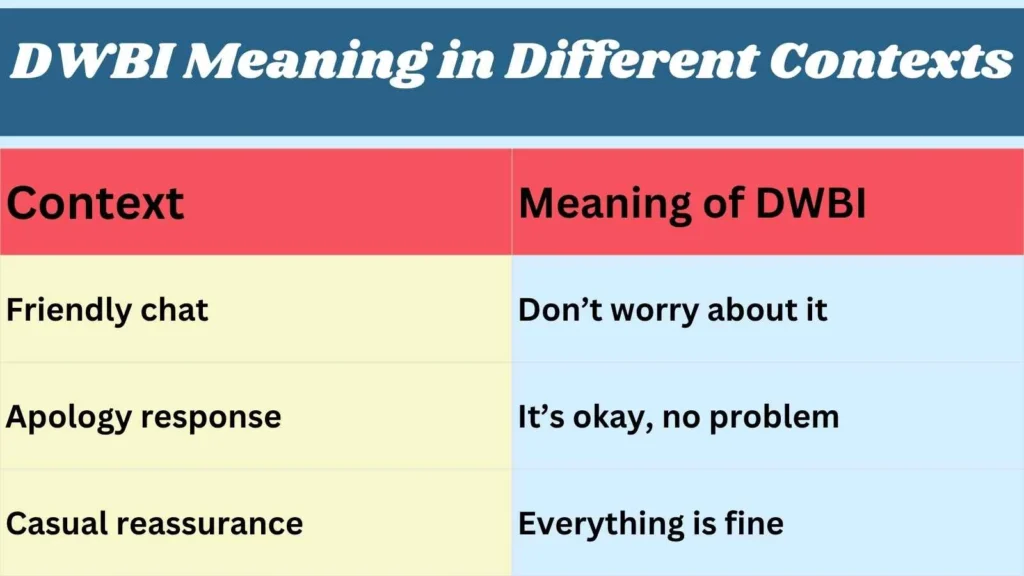
The meaning of DWBI can slightly change depending on the situation. Let’s break it down:
| Context | Meaning of DWBI |
|---|---|
| Friendly chat | Don’t worry about it |
| Apology response | It’s okay, no problem |
| Casual reassurance | Everything is fine |
So when decoding dwbi meaning in text, always check the tone of the conversation.
DWBI in Modern Internet Culture 🌐
Today, dwbi meaning in text reflects the fast-paced nature of online communication. People want quick emotional expression, and DWBI helps achieve that.
It represents the evolution of digital language where simplicity and speed matter more than formal grammar.
FAQs:
1. What does DWBI mean in text?
DWBI means “Don’t worry about it” and is used in casual conversations.
2. Is DWBI formal or informal?
DWBI is strictly informal and should only be used in friendly chats.
3. Can DWBI have different meanings?
Yes, but most commonly it means reassurance like “it’s okay.”
4. Where is DWBI used most?
It is mainly used on WhatsApp, Instagram, Snapchat, and Messenger.
5. Is DWBI still popular in 2026?
Yes, it is still used in modern texting culture and online communication.
Conclusion:
To sum up, dwbi meaning in text is a simple yet powerful abbreviation that helps people communicate in a friendly and stress-free way. It mainly means “don’t worry about it” and is widely used in informal digital conversations.
Understanding slang like DWBI helps you stay updated with modern internet language and improves your communication skills in online chats. 😊
As digital communication evolves, such abbreviations will continue to grow in popularity, making conversations faster and more expressive.

I am Yasir and i am a passionate writer and language enthusiast behind Sloganpoint, a platform dedicated to exploring meanings, word origins, and simple explanations. He aims to make learning vocabulary easy, engaging, and accessible for everyone.