
Language changes fast. New internet slang, identity terms, and social expressions appear almost every day. One term that has become increasingly common online is AGAB. Many people first see it on social media platforms, forums, or discussions related to gender identity and wonder what it actually means.
The AGAB meaning is important because it helps people talk about identity in a respectful and accurate way. Whether you are reading online conversations, learning about LGBTQ terminology, or simply curious about modern language, understanding this term can help you communicate more thoughtfully.
Today, AGAB is used in educational discussions, mental health conversations, social activism, and even everyday online chats. While the term may look simple, it carries deep social and personal meaning for many individuals.
In this guide, you will learn:
- What AGAB means
- The full form of AGAB
- Its origin and history
- How people use it online
- Why it matters in gender discussions
- Examples of AGAB in real conversations
- Common misunderstandings about the term
Let’s explore everything in detail. 🚀
What Does AGAB Mean? 🤔
AGAB stands for Assigned Gender At Birth.
It refers to the gender label that doctors, parents, or society assign to a person when they are born. Usually, this assignment is based on physical characteristics.
For example:
- A baby labeled male at birth may be described as AMAB meaning “Assigned Male At Birth.”
- A baby labeled female at birth may be described as AFAB meaning “Assigned Female At Birth.”
The term AGAB is commonly used in discussions about gender identity because a person’s current gender identity may or may not match the gender they were assigned at birth.
“AGAB focuses on the original label given at birth, not necessarily a person’s current identity.”
The Origin of AGAB 🕰️
The term AGAB became more widely used through LGBTQ communities, gender studies, and online education spaces.
In the past, many societies assumed that biological sex and gender identity were always the same. However, as conversations about identity became more open, people needed more accurate language.
That is where terms like AGAB became useful.
Instead of assuming identity, AGAB simply describes the gender label given at birth. This approach is considered more respectful and inclusive.
Over time, social media platforms helped spread the term globally. Today, it appears regularly on:
- TikTok 🎵
- Instagram 📸
- Reddit 💬
- YouTube ▶️
- Educational blogs 📚
AGAB Full Form 📘
| Short Form | Full Form | Meaning |
|---|---|---|
| AGAB | Assigned Gender At Birth | The gender label given when a baby is born |
| AFAB | Assigned Female At Birth | Person labeled female at birth |
| AMAB | Assigned Male At Birth | Person labeled male at birth |
These terms are often used respectfully in identity discussions because they separate biological assignment from personal identity.
Why AGAB Matters Today 🌍
Understanding the AGAB meaning matters because language shapes how people communicate and respect each other.
For many individuals, gender identity is deeply personal. Using accurate terminology can help create safer and more respectful conversations.
Here’s Why AGAB Is Important:
- Promotes respectful communication
- Supports inclusive discussions
- Avoids assumptions about identity
- Helps explain gender experiences clearly
- Encourages empathy and understanding
Many educational organizations and mental health professionals now use AGAB terminology because it is more precise than older expressions.
Difference Between Sex and Gender ⚖️
One reason AGAB exists is because people increasingly recognize the difference between sex and gender.
| Term | Explanation |
|---|---|
| Sex | Usually refers to physical characteristics at birth |
| Gender | Refers to identity, expression, and personal experience |
AGAB relates specifically to the label assigned at birth, while gender identity refers to how someone personally identifies.
How AGAB Is Used Online 💻
You may notice AGAB in social media bios, comments, or discussions about identity.
Here are some common examples:
- “I’m AFAB but identify as nonbinary.”
- “This experience affects many AMAB individuals.”
- “AGAB does not define who you are.”
In many cases, people use the term to explain personal experiences or social expectations connected to the gender assigned at birth.
Examples of AGAB in Conversations 🗣️
Example 1
Person A: “What does AGAB mean?”
Person B: “It means Assigned Gender At Birth.”
Example 2
Comment: “As an AFAB person, I experienced different expectations growing up.”
Example 3
Online Bio: “Nonbinary | They/Them | AMAB”
These examples show how AGAB helps people explain experiences without fully defining their identity.
Common Misunderstandings About AGAB ❌
Some people misunderstand the term because they assume it defines a person completely. However, AGAB only refers to the original assignment at birth.
Misunderstanding #1
“AGAB tells you everything about someone.”
Not true. A person’s identity is much more personal and complex.
Misunderstanding #2
“AGAB is only for transgender people.”
Incorrect. Anyone can technically discuss their assigned gender at birth.
Misunderstanding #3
“AGAB is offensive.”
The term itself is neutral and widely used respectfully in educational and identity discussions.
AGAB and LGBTQ Conversations 🌈
The term AGAB appears frequently in LGBTQ discussions because it helps separate identity from assumptions.
For example:
- A transgender person may identify differently from their AGAB.
- A nonbinary person may not identify fully as male or female.
- Some individuals may use AGAB terms to explain social experiences.
Using respectful language can help create more inclusive conversations for everyone.
Can AGAB Change? 🔄
No. AGAB specifically refers to the assignment made at birth.
However, a person’s gender identity, gender expression, or understanding of themselves may evolve over time.
That is why AGAB and identity are treated as separate concepts.
Why Respectful Language Matters ❤️
Words influence how people feel and interact. Using respectful terminology shows empathy and understanding.
Even if someone is still learning these terms, asking respectful questions and listening carefully can create healthier conversations.
Helpful communication tips include:
- Listen without assumptions
- Use respectful pronouns
- Avoid judging identities
- Stay open to learning
- Speak kindly and clearly
Internet Culture and AGAB 📱
Internet culture spreads language rapidly. Terms that once appeared only in academic discussions are now common on social media.
Young users especially encounter AGAB through:
- Identity discussions
- Mental health communities
- Educational creators
- Online activism
- Discussion forums
This widespread usage explains why more people search for the AGAB meaning every year.
How to Use AGAB Correctly ✅
Using AGAB correctly mostly comes down to respect and context.
Good Practices:
- Use the term when relevant
- Respect personal identities
- Avoid making assumptions
- Stay informed and open-minded
Avoid:
- Using AGAB to invalidate someone’s identity
- Making rude jokes
- Forcing personal questions
AGAB vs AFAB vs AMAB 🔍
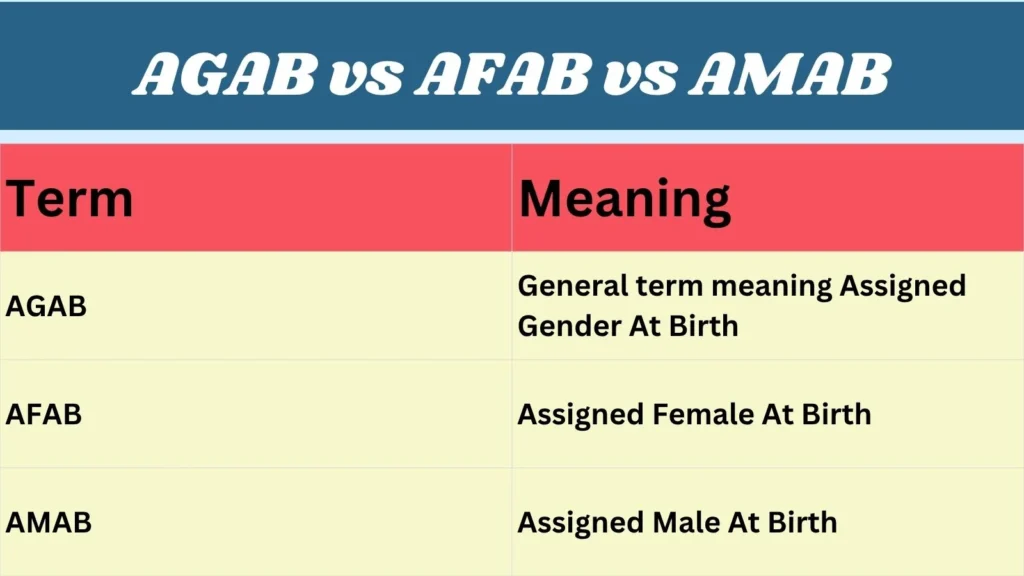
Many people confuse these related terms.
| Term | Meaning |
|---|---|
| AGAB | General term meaning Assigned Gender At Birth |
| AFAB | Assigned Female At Birth |
| AMAB | Assigned Male At Birth |
Think of AGAB as the umbrella term, while AFAB and AMAB are specific categories.
Psychological and Social Impact 🧠
For some individuals, discussions around AGAB connect deeply with identity, confidence, and social experiences.
Supportive communication can positively affect:
- Mental well-being
- Self-confidence
- Community belonging
- Personal safety
This is one reason respectful terminology matters in schools, workplaces, and online spaces.
FAQs:
1. What is the simple meaning of AGAB?
AGAB means Assigned Gender At Birth. It refers to the gender label given when a person is born.
2. Is AGAB only used in LGBTQ discussions?
No. While common in LGBTQ conversations, anyone can discuss their assigned gender at birth.
3. What is the difference between AGAB and gender identity?
AGAB refers to the original assignment at birth, while gender identity reflects how someone personally identifies.
4. Is AGAB a respectful term?
Yes. AGAB is generally considered respectful and inclusive when used appropriately.
5. Why do people use AGAB online?
People use AGAB to explain experiences, identity discussions, and social expectations related to birth assignment.
Conclusion:
The AGAB meaning may seem simple at first, but it plays an important role in modern communication and identity discussions. Understanding terms like AGAB helps create more respectful, informed, and inclusive conversations.
As language evolves, learning these expressions can improve empathy and social awareness. Whether you encountered AGAB on social media, in a classroom, or during a conversation, you now have a clearer understanding of what it means and why people use it.
Most importantly, respectful communication always matters. Small efforts to understand others can create a more supportive world for everyone. ❤️

I am Yasir and i am a passionate writer and language enthusiast behind Sloganpoint, a platform dedicated to exploring meanings, word origins, and simple explanations. He aims to make learning vocabulary easy, engaging, and accessible for everyone.