AF Meaning Revealed In Chat And Online Slang 2026!
Language on the internet changes fast 🚀. Every year, new slang words and abbreviations appear across texting apps, social media platforms, gaming chats, and online communities. One popular slang term that many people search for today is AF meaning. You may have seen it in TikTok comments, Snapchat messages, Instagram captions, or even memes.
If you have ever wondered what AF means in text, you are not alone. Millions of users use this slang daily to make conversations more expressive, emotional, and dramatic. In modern digital communication, short slang phrases help people save time while adding personality to messages.
In this detailed guide, you will learn everything about the AF meaning, where it came from, how people use it online, when to avoid it, and many real-life examples. Whether you are a student, parent, content creator, or social media user, this article will help you understand the modern use of this internet slang term 😊.
What Does AF Mean?
AF is a popular internet slang abbreviation that stands for “As F***.” It is commonly used to add strong emphasis to a sentence or feeling.
People usually place it after an adjective to intensify emotion or description.
Simple Examples of AF Meaning
“I’m tired AF.” 😴
“That movie was scary AF.” 🎬
“She looks happy AF.” 😊
“This food is spicy AF.” 🌶️
In all these examples, AF works as an intensifier. It makes the statement stronger and more emotional.
“AF is one of the most widely used slang intensifiers in online conversations today.”
Origin of AF Slang 🕰️
The phrase “As F***” existed in spoken English long before internet culture became popular. However, the abbreviation AF became common during the rise of texting and social media.
As smartphones became more popular, users started shortening words and phrases to type faster. This trend created abbreviations like:
LOL
OMG
BRB
IDK
AF
Over time, AF became part of mainstream internet slang and started appearing in memes, songs, captions, and viral videos.
AF Meaning in Text Messages 📱
When people use AF in text messages, they usually want to emphasize a strong feeling, reaction, or opinion.
Texting culture encourages quick communication. Instead of writing long emotional explanations, users often choose short slang like AF.
Examples in Texting
Text Message
Meaning
“I’m bored AF.”
Very bored
“That exam was hard AF.”
Extremely difficult
“This weather is hot AF.”
Very hot weather
“I’m hungry AF right now.”
Extremely hungry
Teenagers and young adults commonly use this abbreviation in casual chats because it sounds modern and expressive.
AF Meaning on Social Media 🌍
Social media platforms helped slang words become viral faster than ever before. Today, AF meaning is popular on:
TikTok
Instagram
Snapchat
X formerly Twitter
Facebook
YouTube comments
Discord chats
Reddit discussions
Users often add AF to captions, reactions, memes, and comments for dramatic effect.
Instagram Caption Examples
“Feeling confident AF today 💅”
“This sunset is beautiful AF 🌅”
“Vacation mode AF ✈️”
TikTok Comment Examples
“This trend is funny AF 😂”
“That transition was smooth AF.”
“Your outfit is cool AF 🔥”
Because social media rewards emotional and engaging content, slang like AF fits naturally into online culture.
Why Do People Use AF?
There are several reasons why people use AF in conversations.
1. Adds Strong Emotion
AF helps make feelings sound more intense.
Example:
“I’m excited.”
“I’m excited AF.”
The second sentence sounds much stronger and more emotional.
2. Saves Time ⏰
Typing short slang is faster than writing long explanations.
3. Sounds Trendy
Internet slang helps users sound modern and socially connected.
4. Creates Humor 😂
AF is often used in funny memes and jokes because exaggerated reactions attract attention.
Is AF a Bad Word?
This is one of the most common questions people ask.
The answer depends on the situation and audience.
Because AF stands for “As F***,” some people consider it mildly offensive or inappropriate in formal settings.
Situations Where AF Is Usually Acceptable
Casual texting
Talking with friends
Social media captions
Memes and jokes
Gaming chats
Situations Where You Should Avoid AF
School assignments
Professional emails
Job interviews
Business communication
Formal presentations
Understanding context is important when using slang online.
Different Ways AF Is Used Online 💬
People use AF in many creative ways across the internet.
1. Positive Emotion
“Cute AF” 🥰
“Happy AF” 😊
“Rich AF” 💰
2. Negative Emotion
“Sad AF” 😢
“Angry AF” 😡
“Stressful AF” 😩
3. Humor and Memes
“Awkward AF”
“Cringe AF”
“Lazy AF” 😂
4. Lifestyle Content
“Healthy AF” 🥗
“Luxury AF” ✨
“Busy AF”
AF Meaning in Gen Z Culture 🧑💻
Gen Z uses internet slang heavily in daily communication. AF became especially popular because it fits the fast and emotional style of modern social media.
Gen Z users often combine AF with emojis, memes, and trendy phrases.
Popular Gen Z Expressions
Expression
Meaning
Funny AF
Extremely funny
Cool AF
Very cool
Tired AF
Extremely tired
Cute AF
Very attractive or adorable
Short slang terms help online conversations feel more energetic and relatable.
AF Meaning in Memes 😂
Memes often exaggerate emotions for entertainment. That is why AF appears frequently in meme culture.
Examples include:
“Monday mornings be stressful AF.”
“When your internet stops working and you panic AF.”
“Trying to act calm but nervous AF.”
Memes rely on humor and relatability, and AF helps increase emotional impact.
How AF Changes Sentence Tone 🎭
One interesting thing about AF is how it changes the emotional tone of a sentence.
Without AF
“The game was exciting.”
With AF
“The game was exciting AF.”
The second sentence sounds:
More emotional
More dramatic
More casual
More internet-friendly
This is why slang terms become powerful communication tools online.
Can AF Have Different Meanings?
Yes, although “As F***” is the most common meaning, AF can occasionally represent other phrases depending on context.
Alternative AF Meanings
Air Force
Audio Frequency
Atrial Fibrillation
Artificial Flavor
However, in texting and internet slang, AF almost always means “As F***.”
Examples of AF in Real Conversations 💬
Conversation Example 1
Friend 1: “How was the concert?”
Friend 2: “Amazing AF 🔥”
Conversation Example 2
Student: “Are you ready for exams?”
Friend: “Nervous AF 😭”
Conversation Example 3
User: “How’s your new job?”
Reply: “Busy AF but fun!”
These examples show how naturally AF fits into casual communication.
Should Parents Understand AF Slang? 👨👩👧
Yes. Modern internet slang evolves quickly, and understanding terms like AF can help parents better understand online conversations.
Many teenagers use abbreviations naturally while chatting online. Learning common slang helps parents:
Understand texting language
Communicate better with teens
Recognize online trends
Stay informed about digital culture
However, context always matters. AF is usually casual slang rather than harmful language.
When Should You Avoid Using AF?
Although AF is common online, there are situations where it may appear unprofessional.
Avoid AF In:
Business emails
School essays
Academic writing
Professional meetings
Formal social media pages
Using proper language in professional settings shows maturity and communication skills.
How Internet Slang Shapes Modern Communication 🌐
Internet slang like AF reflects how communication continues to evolve in the digital world.
Today’s online users value:
Fast communication
Emotional expression
Humor
Creativity
Relatable content
As a result, slang abbreviations become part of everyday language.
Many internet terms that once seemed unusual are now widely recognized globally.
AF Meaning in Pop Culture 🎵
AF appears regularly in:
Song lyrics
TikTok trends
Comedy videos
Viral tweets
YouTube content
Streaming culture
Pop culture helps slang terms spread rapidly across different age groups and countries.
Many influencers and creators use AF because it sounds expressive and relatable.
Tips for Using AF Correctly ✅
1. Use It Casually
AF works best in relaxed conversations.
2. Know Your Audience
Some people may dislike profanity-based slang.
3. Avoid Professional Use
Keep slang separate from formal communication.
4. Use It Naturally
Overusing slang can make writing sound forced.
Common Sentences Using AF
“This pizza is good AF 🍕”
“I’m sleepy AF.”
“Your dog is cute AF 🐶”
“That game was intense AF 🎮”
“Today feels long AF.”
“This place is crowded AF.”
AF Meaning for Beginners
If you are new to internet slang, remember this simple explanation:
AF means “As F***” and is used to make emotions or descriptions stronger.
That is the easiest way to understand the term.
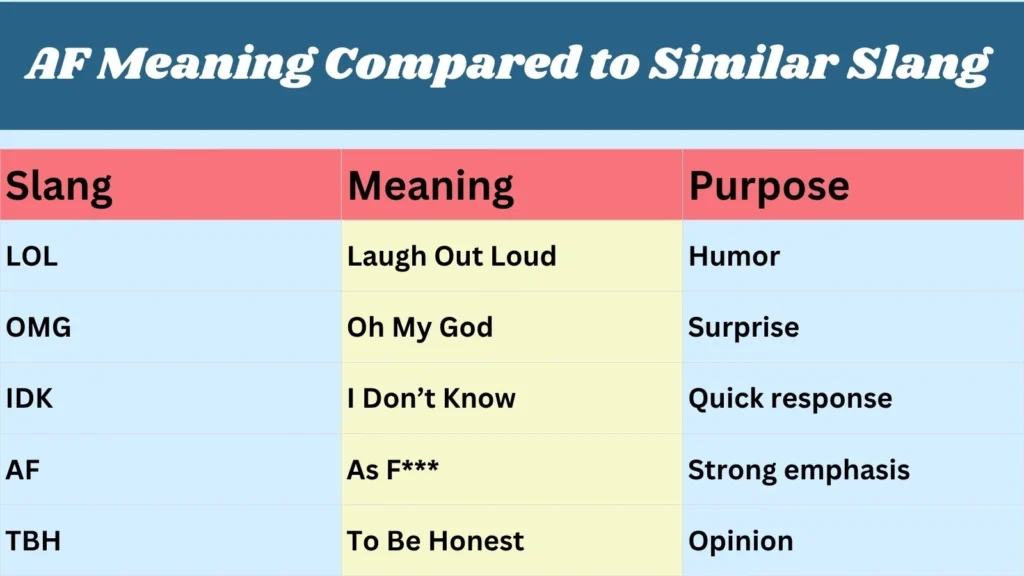
AF Meaning Compared to Similar Slang
There are many internet slang terms similar to AF.
Slang
Meaning
Purpose
LOL
Laugh Out Loud
Humor
OMG
Oh My God
Surprise
IDK
I Don’t Know
Quick response
AF
As F***
Strong emphasis
TBH
To Be Honest
Opinion
Each abbreviation serves a different purpose in digital communication.
FAQs:
What does AF mean in texting?
AF means “As F***” and is used to add strong emphasis to emotions or descriptions in casual conversations.
Is AF rude?
It can sound mildly offensive because it is based on profanity. However, many people use it casually online.
What does AF mean on TikTok?
On TikTok, AF is commonly used in captions, comments, and memes to exaggerate reactions or feelings.
Can kids use AF?
Many teenagers use AF online, but parents and schools may consider it inappropriate in formal situations.
What is the full form of AF?
The full slang form of AF is “As F***.”
Conclusion:
Understanding modern internet slang is important in today’s digital world.
The AF meaning has become extremely common across texting, memes, TikTok, Instagram, and online conversations. It helps users express emotions in a quick, dramatic, and relatable way.
Although AF is mostly casual slang, context matters. It works well in friendly conversations and social media posts but should usually stay out of professional communication.
As internet culture continues evolving, slang terms like AF will remain a big part of how people communicate online 🌍.
I am Yasir and i am a passionate writer and language enthusiast behind Sloganpoint, a platform dedicated to exploring meanings, word origins, and simple explanations. He aims to make learning vocabulary easy, engaging, and accessible for everyone.